
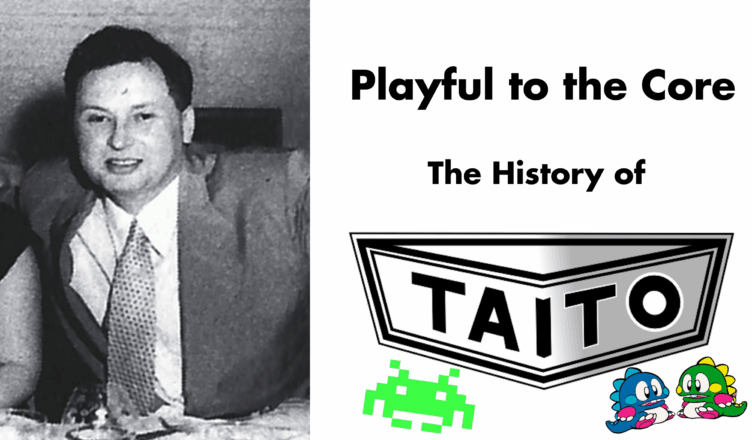
This article is part of a new series on Gaming Alexandria called Origin of Game, stories of how famous game companies came to be! These tales written by staff and guest authors draw on research gathered over the years and give a glimpse into the people who defined video game history. We hope these articles will stoke your desire to learn more about the developers and publishers who have made our world fun!
Chairman Mao played a bigger role than you’d probably expect in the development of video games. I’m not kidding. If we accept Space Invaders as one of the cornerstone moments in the development of the medium, then we can say Mao played an important role in triggering the chain of events that ended up with tiny pixel aliens filling CRT monitors all over the world.
Space Invaders was the product of Japanese arcade titan Taito. Except, for a Japanese company, there really wasn’t much that was Japanese about Taito’s founding.
Originally existing under the Chinese-rendered name of Taitung, Taito was created by Mikhail/Michael (“Misha”) Kogan, the son of Ukrainian immigrants to China. At its founding, the only real link Taito had to Japan was the fact that Kogan had recently graduated from the prestigious Waseda School of Economics, escaping to China just before Allied bombing raids began in earnest and burned large chunks of his former uni to the ground. Founded in 1944 in Shanghai and stocking wigs, hog brushes, and tins of condensed milk, Taitung was about as far from our Taito as you could imagine.
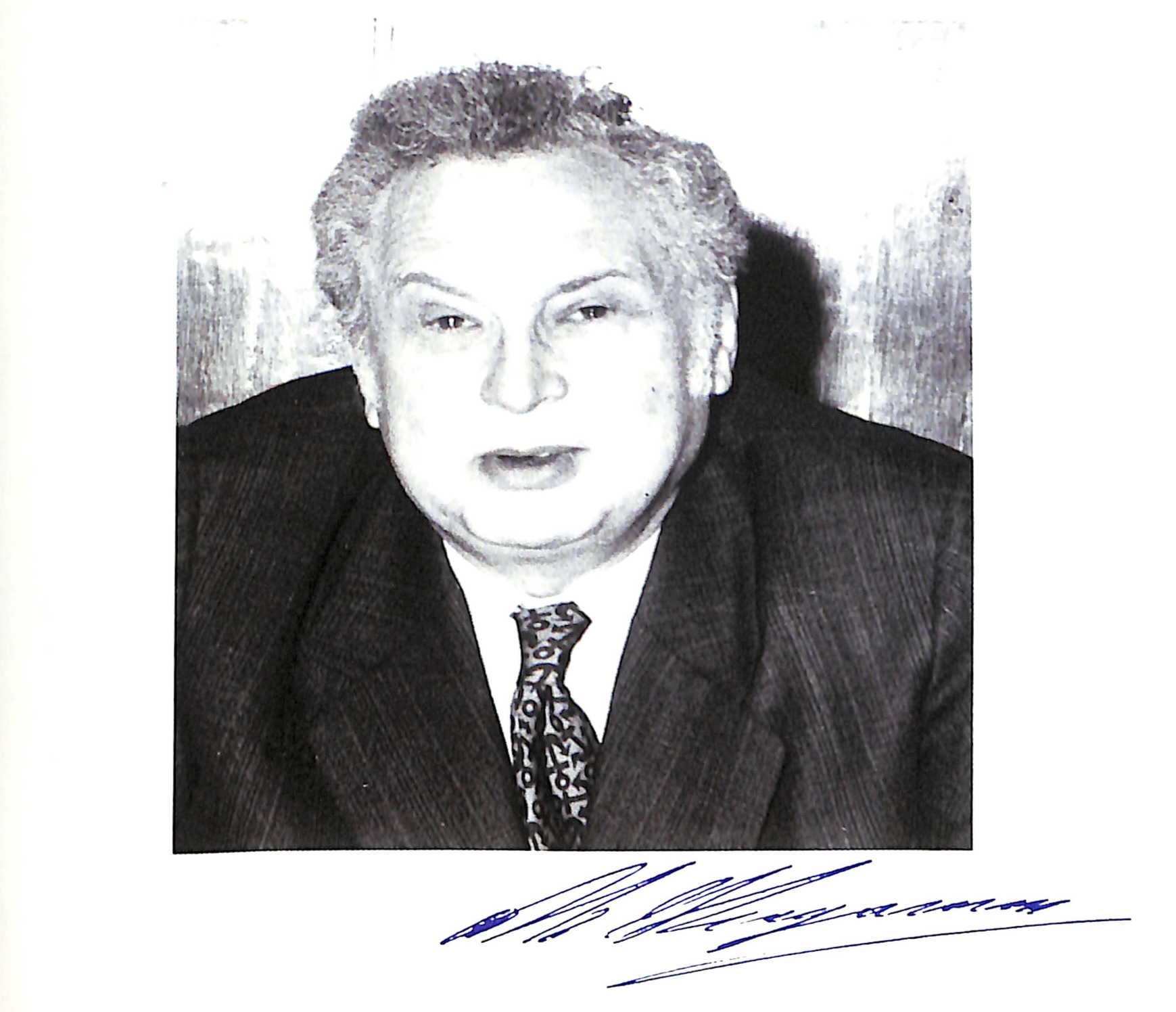
It might have stayed that way, except in 1949 the Communist Party emerged victorious from China’s on and off civil war. Kogan saw that the writing was on the wall and liquidated his business before Mao’s purges of landlords and businessmen began in earnest. With his family having been settled in China since he was eight, Kogan opted to start afresh in the only other country he’d recently called home: Japan. Had the victory of the Communist Party not forced Kogan out of China, Taitung wouldn’t have become Taito.
It wasn’t just Chairman Mao who played a crucial role in driving Kogan towards Japan. Michael Kogan was the son of Jewish immigrants, but calling them immigrants is slightly bashful phrasing. Just over twenty years before Michael was forced to leave China, his parents were forced to make a similar exodus from Ukraine. Though the period from 1914 had been tough – the ominously free-flowing Eastern Front of the first World War had morphed into a Ukrainian Civil War and the eventual victory of the Soviets – things came to a head in 1928 when Stalin revoked the tolerance for small businesses his predecessor Lenin had introduced.
Rising anti-capitalist rhetoric had made life for Michael’s store-owning father difficult, but the removal of official toleration made it impossible for them to earn a living – leading the Kogans to make the difficult decision to leave the country. It was probably for the best: Though Stalin publicly condemned antisemitism in 1930, anti-jewish attitudes continued to permeate unchecked at all levels of Russian government; Stalin’s own growing intolerance led to Pogroms post-World War 2.
They were not alone, mind you. Many Russian Jews also realised that the situation in the country was unsafe for them and fled the country for France, Poland, Brazil, or Palestine. Had the Kogans opted to emigrate to any of these locations, Taito as we know wouldn’t have existed. Instead, they opted to make the journey to China, inadvertently facing the grim comedy of fleeing one big communist revolution by heading towards the next.
The journey was an arduous one, taking the Kogans to the Northeastern Chinese city of Harbin in the region formerly known as Manchuria. Covering 4,000 miles, it combined stints of both train and foot travel. It also came with significant risk on multiple fronts. Aside from being undertaken in the pre-antibiotic age where seemingly-minor childhood accidents or infections could prove fatal, the faltering economy meant that by 1930 China was home to up to 500,000 bandits.
Once they arrived, the young Michael Kogan found that international affairs were not yet finished with him. The events which transpired over the next few years played a vital role in shaping both his education and his later business activities.
The Kogans enjoyed just four years of peace and quiet in the multicultural metropolis. 1931 saw the Japanese military stage the Mukden Incident, a transparent false-flag attack against a rail company which they used as an excuse for conquering the Chinese territory, operating Manchuria as the puppet state Manchukuo.
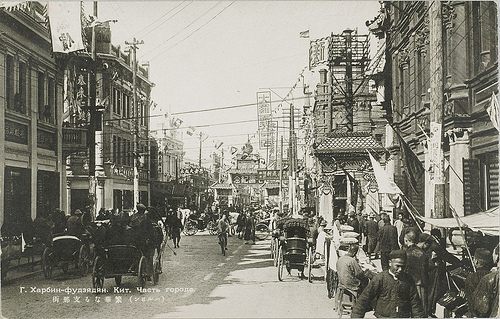
To say that minorities didn’t fare well under Japanese rule is to put it finely. (For example, by 1945 the Oroqen people had been hit so badly by a combination of forced labour, human experimentation and targeted opium distribution that only around 1,000 of them survived.) But the puppet state’s Jewish population lucked out. Well…ish.
Following the violent murder of a prominent Jewish citizen, the Japanese government appointed Colonel Norihiro Yasue to lead Manchukuo and prevent a mass exodus of the Jewish minority. Exposed to Russian antisemitism as a young officer, Yasue had come away with an interesting take: as global financiers, the Jews could be a powerful ally for Imperial Japan.
Though his approach to the Jewish people was originally cynical and self serving, at some point that morphed into genuine affinity. Not only was Yasue part of a group with an ambitious plan to safely resettle displaced European Jews in China. But when that fell through he later intervened in favour of Chinese Jews by foiling a Nazi plan to butcher the Jewish Ghetto in Shanghai.
Crucially, by the point Yasue took over, Kogan had morphed from a sweet eight year to a gobby teenager. Taking an interest in the political struggles of the Jewish people, he joined the local Beitar Youth cell, and came to the attention of Colonel Yasue who helped him land a place at the Waseda School of Economics in Tokyo. Had it not been for Imperial Japan’s invasion of China and the actions of Colonel Yasue, it’s unlikely Kogan would have thought of the country as a place to move his importing business a decade later.
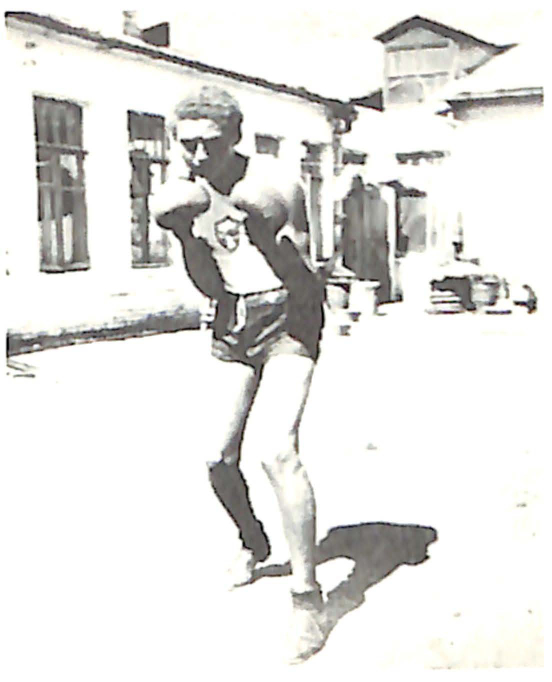
Rerendering the Chinese Taitung into the Japanese Taito, his next business – Taito Yoko – focused on clothing but failed, reportedly because of employee carelessness with the stock. He launched a new company shortly afterwards, this time called the Taito Trading Company, founded in 1953. Kogan was backed in this venture by an incredibly capable lieutenant: his karate instructor, a lawyer, and ex newspaper man Akio Nakanishi (whose leadership would be vital to the survival of the company following Kogan’s death).
Taito also got into a new business. Leaning fully into Kogan’s Ukrainian roots, the new version of Taito would sell and distill vodka. According to official Taito sources, their Troika brand was high quality stuff. The actual distilling work required a government permit so had to be outsourced to Oyabu Brewery in Nagoya, but Kogan arranged for it to be supervised by knowledgeable Russians and for the vodka to be filtered through birch carbon to stay fully authentic. Though Taito scored some impressive clients (as suppliers of the prestigious Imperial Hotel, they achieved an honour that even Japanese Beverage titans Kotobukiya – known today as Suntory – couldn’t match), three years later they were in a bind.
They’d put strong effort into both establishing themselves as a vodka company, with Nakanishi managing the production of the product by day then venturing out on sales calls at night. But by raising awareness around the product they had inadvertently helped to pave the way for established beverage giants Nikka, Kotobukiya, and Saika to introduce their own Vodka lines. With their three-year contract with Oyabu Brewery approaching its end, the Taito Trading Company opted to cut their losses around the end of 1955 rather than seek an extension.
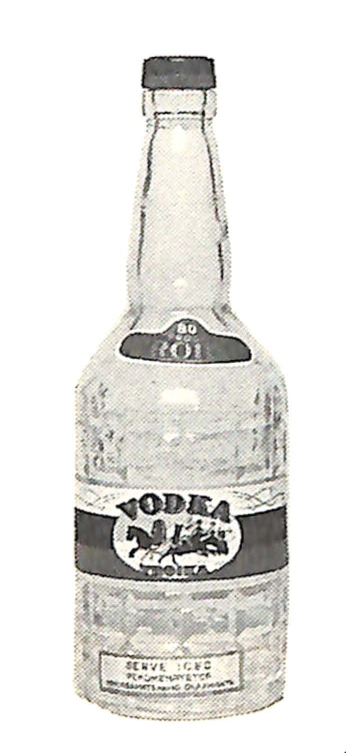
The relative failure of Troika didn’t matter as the Taito Trading Company had already diversified. Their second line of business was coin-operated vending machines – with one line being a simple tabletop peanut vendor and the second a more ambitious perfume vending machine. Though the Japanese public’s lack of awareness around perfume meant the second line never extended beyond Tokyo, Taito were much more successful with their peanuts. Aside from being able to sell the machines to bars as a natural companion to their Vodka (what better companion to an alcoholic beverage is there than a salty snack?), they also managed to place them in coffee shops. With the vending machines supplying a steady stream of income, coin-operated machines appeared to be their future, but which product line would they go with next?
Taito’s next target was a U.S. import which had seen tremendous growth in its home region but remained practically unheard of in Japan: the jukebox. Quite why Taito opted for automated music players isn’t clear. Given the company was already active in both the nightlife and automatics industries, it could be argued that jukeboxes were merely a logical next step. We could also possibly cite psychological reasons, with the turbulence of Kogan’s life potentially giving him particular insight into the importance of providing people with the tools they needed to enjoy the moment in a chaotic and unpredictable world.
More intriguingly, perhaps they received business intelligence from the outside, as 1955 had seen the company move into the Masonic Building in Shiba, Tokyo. This also happened to also be home to Service Games Japan – a forebear of Sega who were already engaged in the slot machine business. Either way, the only obstacle between the Taito Trading company and a successful jukebox business was, well, an inventory of jukeboxes.
That was a bit of a sticking point. Jukeboxes were expensive (around two million yen). In Japan’s recovering economy they were also classed as luxuries by the government; items which required a permit before they could be imported. Taito applied for permission but – spoil sports that they were – the Japanese government turned them down. Oh dear.
Thankfully, geopolitics came to Kogan’s aid this time. The surrender of Japan at the end of World War 2 meant the country was occupied by around a million Allied troops stationed in old imperial military bases dotted around the country. Those bases had mess halls where the troops could enjoy their down time and often featured coin-operated amusement, like Service Games’ slot machines and – more importantly – jukeboxes. Better still, Allied squaddies were also pretty hard-wearing on their machines, meaning they frequently broke down and needed repair.
Taito didn’t need to import machines to have a jukebox biz – they just needed to make use of the ones that were already in Japan. The business model they came up with was pretty simple. All Taito needed to do was buy knackered jukeboxes on the cheap, combine the parts from three or four of them into one working unit and rent them to the local market. Genius!
So, we’ve seen all of the ways that political events drove Kogan and Taito towards becoming a company that supplied amusement machines, but how did they get into games? Though the jukebox business was a profitable one that allowed Taito to charge 40,000 yen a month per box, it also provided multiple challenges, such as the practicalities of driving overladen vans over local (pre-expressway) roads, physically lifting heavy machines into venues, and dealing with both mechanical failure and sabotage (patrons would often jam gum into the coin slot.) Initially, the company even had to deal with complete ignorance of the product and explain that they were selling jukeboxes and not “juice machines”.
Because of the mix of opportunities and challenges, Taito were left in a difficult position. As the Japanese economy recovered, the opening of new venues like inns increased demand for their machines beyond a level that could be met with hastily-repaired scrappers. They attempted to solve this by developing their own in-house jukebox, the Juke J40, which contained a mix match of Japanese and European components that led to machines which initially worked but would frequently and inevitably break down. To top it off, they also soon faced bitter competition in the jukebox sphere – with Nakanishi reportedly having to rise from a hospital bed in order to personally prevent a Taito venue from being aggressively poached by the Tsugami company.
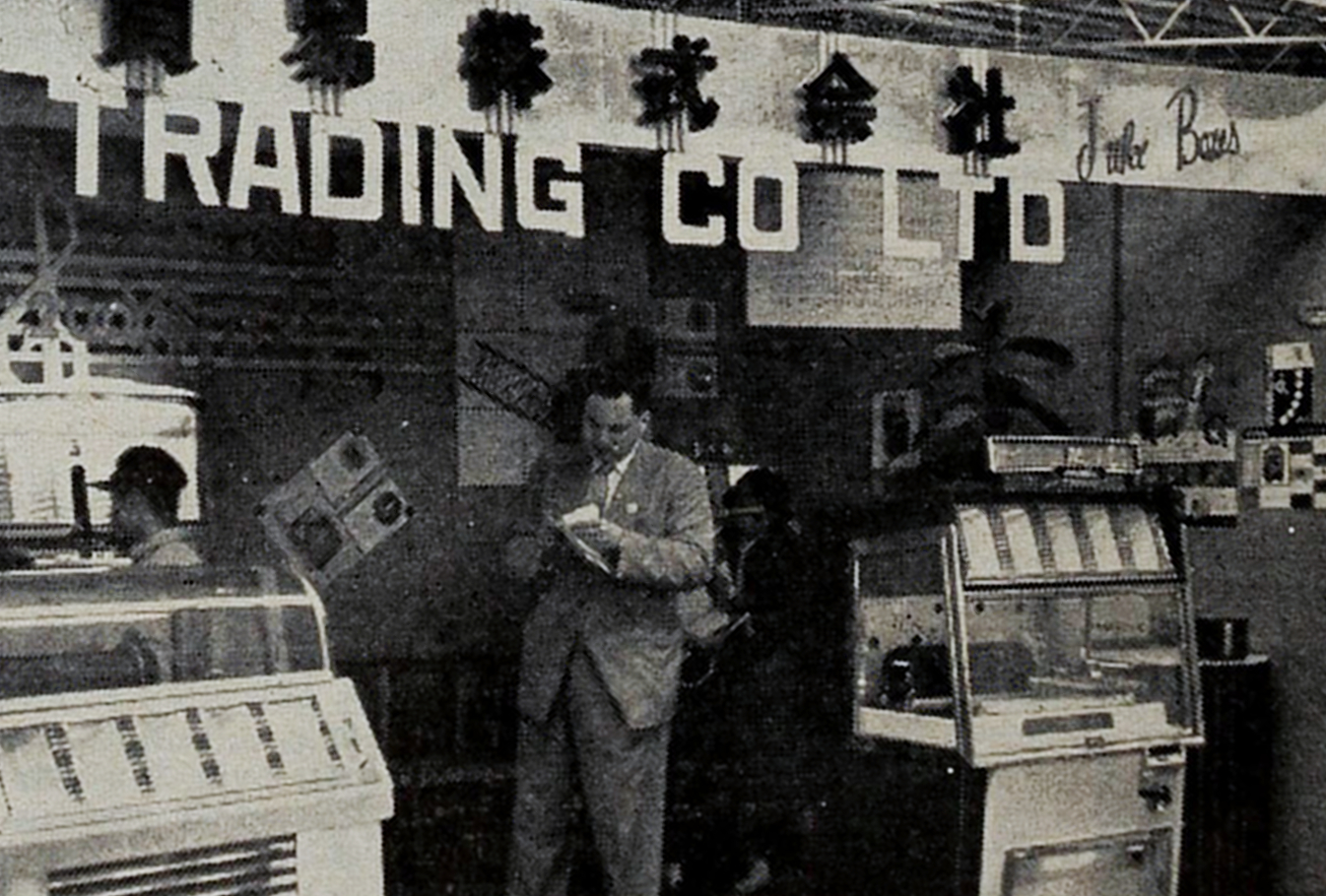
Taito eventually solved their inventory problem by becoming the Japanese distributor of AMI in 1958 and Seeburg in 1962. They saw the potential of their jukebox business unlocked by first including an optimal selection of music (they discovered it helped to add local music alongside the default selection of Western music supplied with the box). Later, they raised the price-per-play of songs. But it probably shouldn’t be a surprise that the Taito Trading company looked for additional business lines.
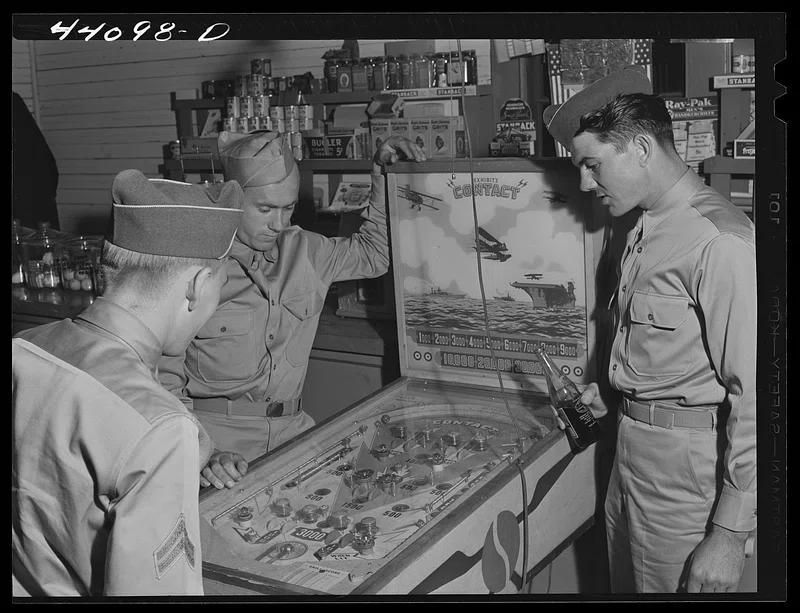
Alongside jukeboxes and slot machines, American military bases were also big importers of coin-operated games for soldiers to enjoy in their down time. One particular type which had enjoyed a steady increase in popularity was pinball. Though Japan’s own popular version of the pin game – pachinko – experienced a revival after being banned during the war, its close links with gambling meant that Western pin tables provided an alternative that could be placed in a bar.
From 1956, Taito started refurbishing ex-military pinball tables in addition to their jukeboxes, a logical step that changed the company into a supplier of coin-operated games. Circumstances had forced the company to constantly chop and change markets from its inception, but Taito suddenly found itself in a position where it could plant roots and become a leader in a new, rapidly growing market.
Except, they weren’t alone. Mid-twentieth century geopolitics provided them a new business, but it delivered them competition from several sources. Among the most prominent was an ex-Korean war fighter pilot and businessman David Rosen. Rosen was somewhat similar to Kogan, striking gold with coin-operated games after increased local competition forced him out of his original photobooth business. Together, Taito and Rosen Enterprises proved to be the yin and yang of the electro-mechanical game industry, with Kogan using his nightlife contacts to get Taito’s pinball tables into bars and Rosen making use of cinema contacts to set up his ‘gun corners’ as part of Japanese movie theatres.
Despite the competition, Taito continued their push into coin-operated amusements in the 1960s. When David Rosen opened a dedicated game center in Tokyo in 1959, Taito also pushed into operating, opening their own larger location in 1960. The company would have challenged Rosen Enterprises directly by locating their game center in Tokyo except that a lack of space in the crowded harbours of Tokyo and Yokohama made the logistics impossible. Taito instead opted to open their venue in Kamiroku, Osaka, packing in over forty shooting and pinball games; opening a workshop around the corner from the Osaka International Hotel to assemble the machines before moving them into the venue.
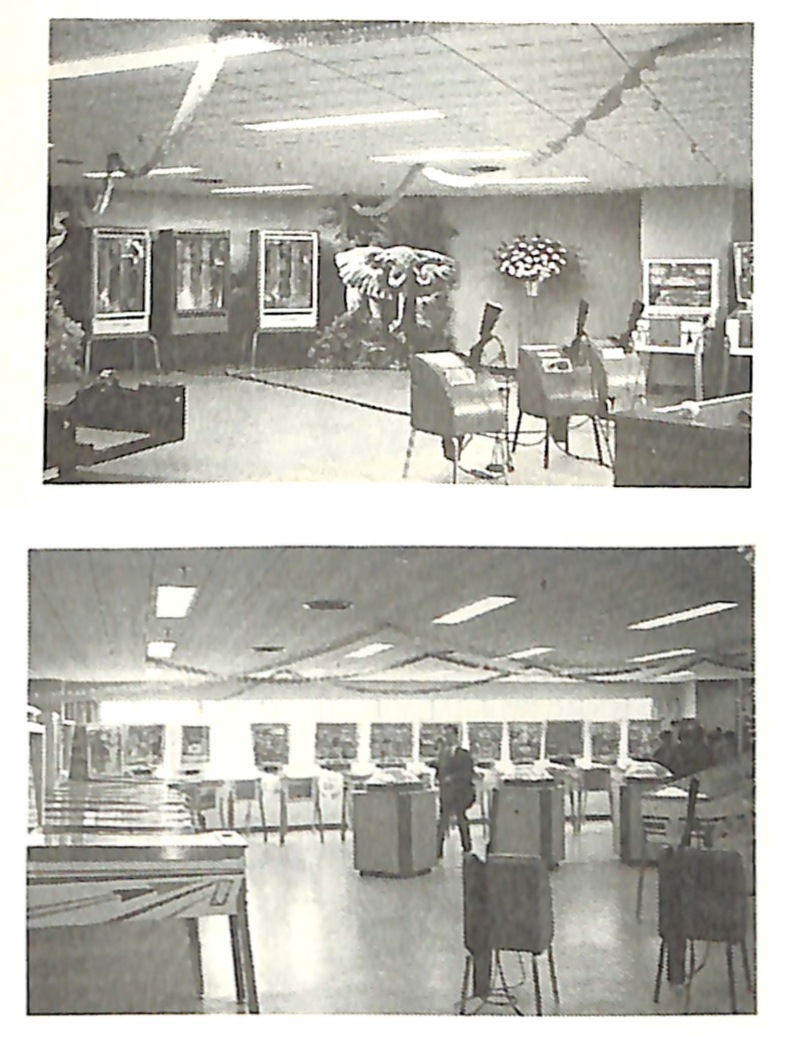
Though Taito were still forced to refurbish pinball tables with parts taken from multiple duds when they opened their Osaka venue, in 1962 the rules governing game machine imports were relaxed. This allowed Taito to partner with D. Gottlieb & Co. to import new, official, pinball machines into the country. This didn’t fully alleviate Taito’s supply issues, however, as demand for their game machines was growing in step. Not only was there strong demand from the kinds of venues Taito already sold to, but a new generation of small game corners were popping up on shopping streets across the country.
1960 had marked the beginning of the Japanese government’s ‘income doubling’ economic plan, a watershed moment that started the process of Japan emerging as one of the world’s most prosperous nations. New shops opened to provide the population with opportunities to spend their newly-disposable cash. As they chopped and changed their wares to meet the public mood, many of them (with the help of companies like Taito, it must be said) latched onto game machines as a good way of generating dependable income. As Nakanishi explained:
“When sales decline, [stores] start stocking items that have nothing to do with the store. There’s no use leaving ice cream there, I wonder if there’s anything else [we can stock]? Try putting one or two game machines there. Then, a lot of customers came, so two or three more machines were added. Over time, [the shop] becomes a game corner… So, when I heard that the geta [sandal] shop on so-and-so street was closing its doors, I immediately rushed down there.”
In the midst of growing demand for game machines, 1963 saw Taito take the plunge and open their own factory. This wasn’t a purely reactive measure. Taito had harboured ambitions to go in this direction since at least March 1956, when they placed an advert in Billboard Magazine describing themselves as ‘Pioneers of coin industry in Japan’, and sought international partners who were looking to manufacture machines in the country.
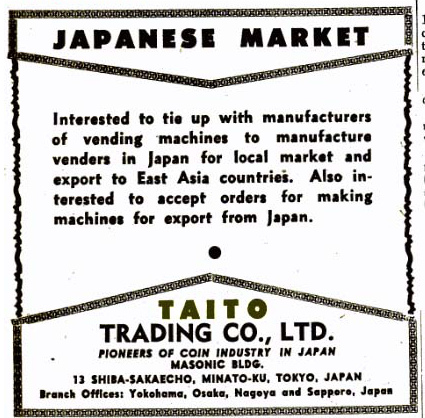
Whether Taito could have handled an extensive manufacturing contract at that time is questionable (Nakanishi described the workshop they used to refurbish their jukeboxes and pinball tables as “a kind of shed”) but the subsidiary company they founded in 1963, Pacific Industries Co., Ltd, was definitely up to the task. Though the building may have had a tin roof that exposed workers to baking temperatures in summer and freezing cold in winter, Pacific Industries’ factory proved transformational for Taito.
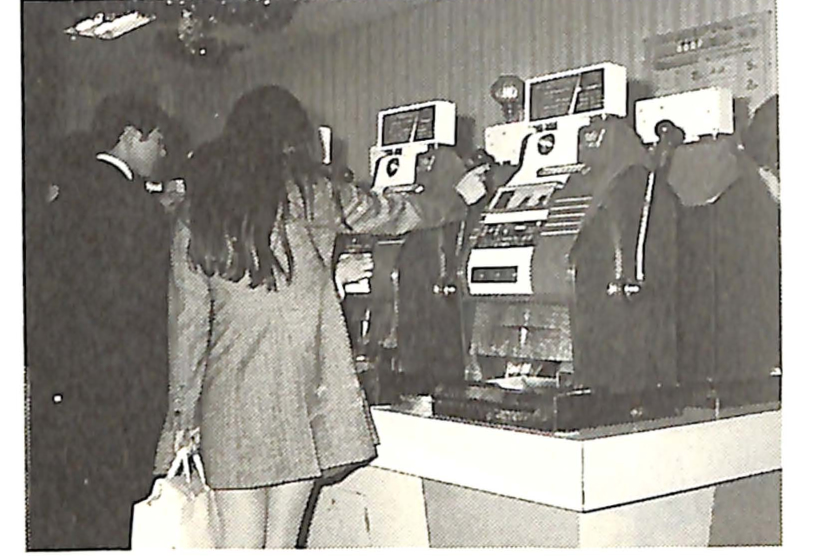
As early as 1964, the stratagem of building their own gaming machines proved its worth. Taito had been involved in protracted discussions with the Japanese police since around 1959, as they had come up with an ingenious plan for a new kind of gambling machine. As in many other countries, games of chance were strictly regulated in Japan, but Taito proposed modifying an existing slot machine so the player was able to stop each reel individually. Taito argued that this change added an element of skill, exempting the machine from the normal restrictions that would apply to a game of chance. To the shock of the Japanese gambling industry, the police agreed to Taito’s proposal in 1963, and the resulting machine – Olympia Games – emerged as an important founding machine in both the pachislot and medal game markets.
In the long run, the Olympia line would be a source of headaches for Taito, as the products would be dogged by unauthorized clones and invited suspicion that Taito operations were linked to illegal gambling houses raided by the police. The initial 1964 machine did well financially, however, with the (unsanctioned) tie-in to the 1964 Olympics being an obvious money-spinner. The foreign cigarettes Taito had arranged as prizes proved popular too. Nakanishi later joked that Taito shipped so many Olympia machines to the island of Okinawa that he was worried it would sink, so we can say that Pacific Industries’ first big machine was a hit.
Taito and Pacific Industries were also able to follow up on Olympia Games’ success the very next year with an idea that came to them via the Mediterranean. In the mid 1960s, Italian gaming had a gambling problem. Games of chance had been banned by the Italian fascists in 1931, and the potential links between gambling and organised crime meant the ban remained in force once the country became a democratic republic. In fact, enforcement had become tighter: In 1959 the Italian government had cracked down on pinball tables – which they viewed as illegal gambling devices – and in May 1965 they tightened the 1931 legislation by outlawing all forms of automatic and semi automatic gaming devices in public places. This ban applied to any machine that carried a prize or stake – even if the prize came in as lowly a form as ‘a drink or a replay of a game.’
Italy’s loss ended up being Japan’s gain. Even before the formal law change, machine distributors took note of the Italian government’s increasingly hostile stance and began to move games they either had placed or were about to place into the Italian market. As the Japanese public’s appetite for game machines grew at an exponential rate, it emerged as a strong candidate as a new home for these machines.
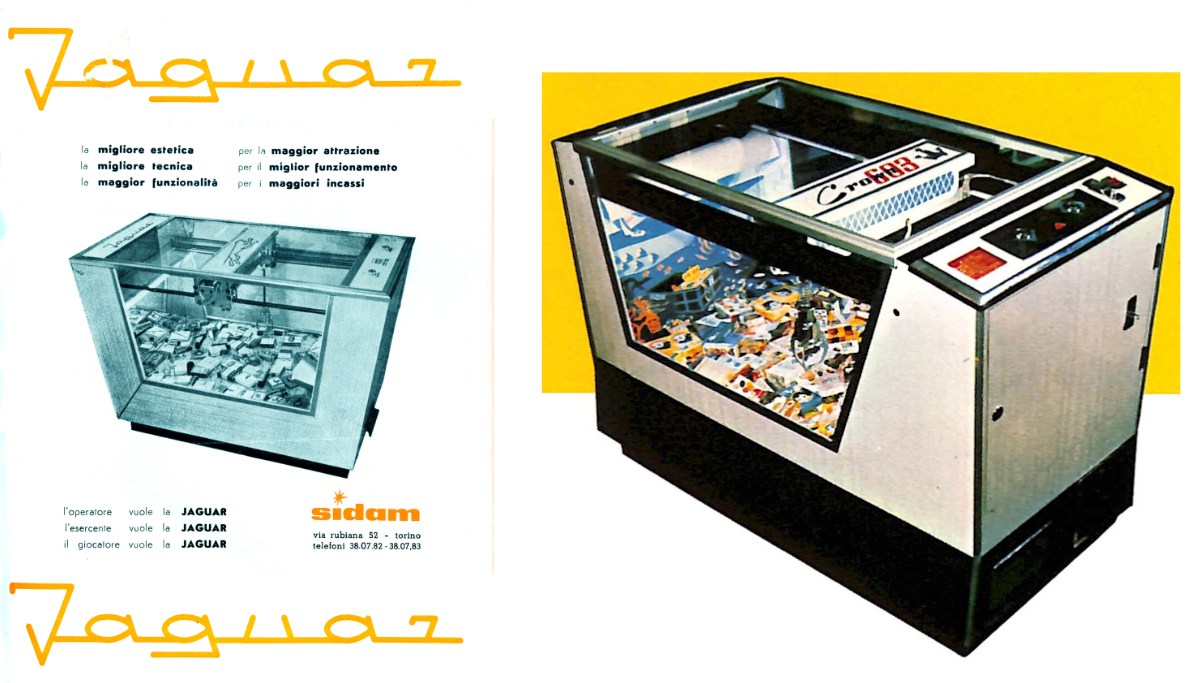
Of the new Italian arrivals, one genre that found rapid success in Japan were crane games like Jaguar Crane, which captured the imagination of the Japanese public with their simple concept and small but desirable prizes. The Pacific Industries factory provided Taito a good position to swiftly produce their own domestic version of the crane game – Crown 602 – and the company rode the wave of popularity. Rapidly iterating over the next couple of years through improved crane games – Crown 603 and Crown 605 – Taito’s success helped cement both the place of the crane as an arcade mainstay and Taito as a premier Japanese manufacturer of arcade machines.
The overwhelming success of Taito’s early machines gave them the confidence they needed to take their amusement operations overseas. According to his obituary in Japanese industry magazine Game Machine, 1965 saw Michael Kogan fully relinquish day-to-day control of Taito’s domestic operations to Nakanishi, with the exploration of overseas markets remaining one of Kogan’s key areas of interest. Success in this area also came to Taito sooner than we might have expected.
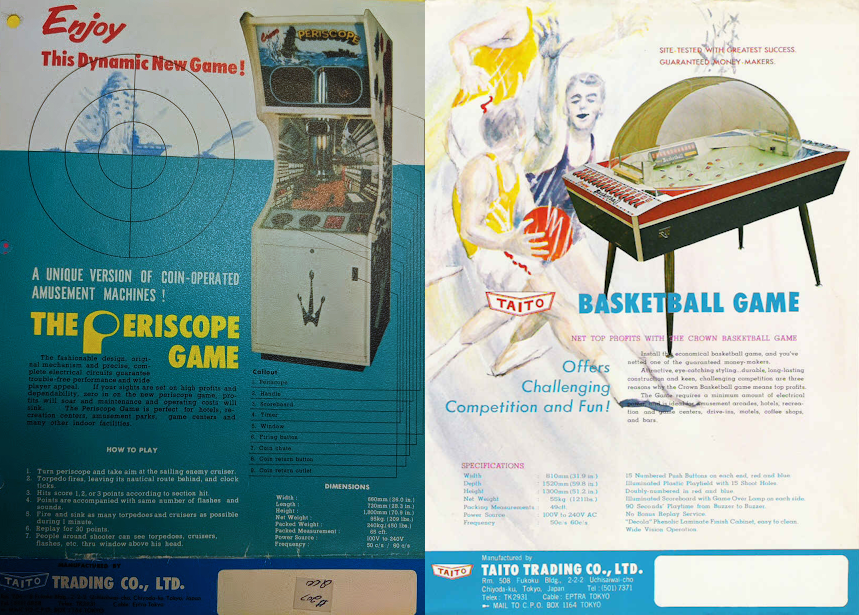
Though it’s difficult to discuss Taito’s early electro-mechanical titles without them sounding like cheap knock-offs of existing game designs, international success demonstrates that Pacific Industries brought a good degree of craftsmanship to their product. Taito arrived at 1968’s Tampa Fair in America equipped with two player sports titles, Crown Basket Ball and single player submarine-themed shooting range Crown Periscope (two game designs that had been deployed by their Japanese competition). The pair were a tremendous success despite their relative unoriginality. U.S. coin-operated trade magazine Cash Box reported the two machines took a haul of $832 over the course of the fair – the closest competitor was a long way off with a total of $518.
Taito’s success on the international stage even caught the attention of the Japanese government. In a ceremony at the Hibiya Public Hall in June 1970, the Japanese Minister of International Trade and Industry presented the company with a certificate that recognised Japan’s contribution to the nation’s export economy.
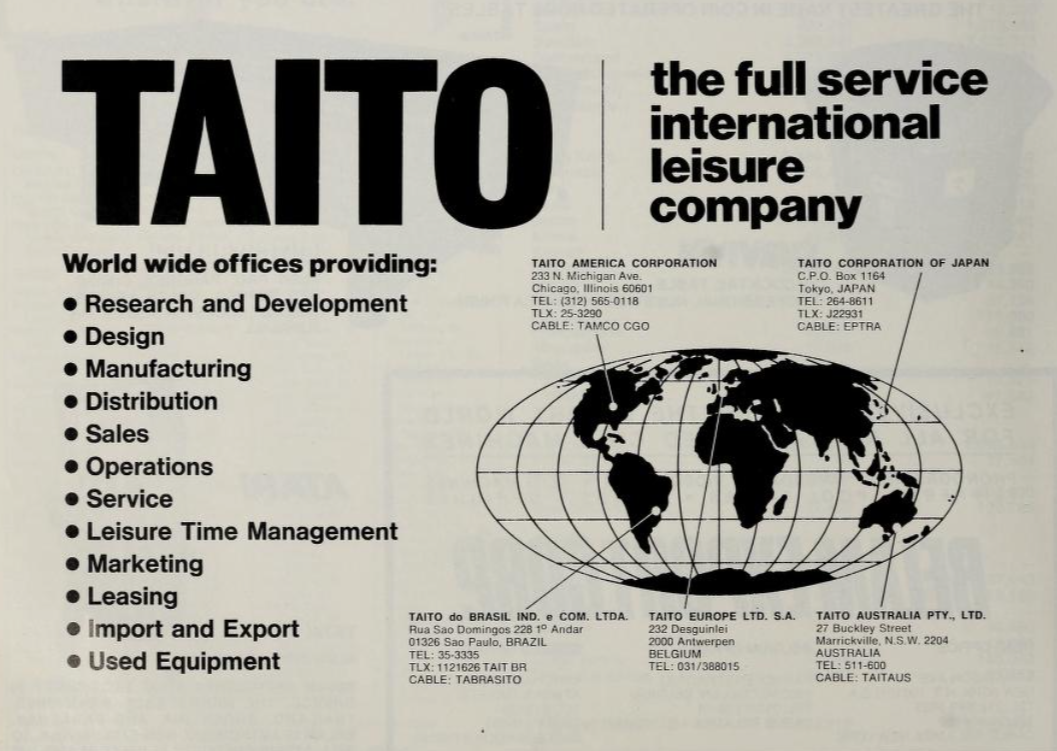
Though life can retrospectively seem like a bunch of bonkers coincidences that can change course on a dime, by 1973 Taito’s entry into the video games market was close to inevitable. In 1972 the company officially changed its name to Taito Corporation, reflecting that its seven hundred employees, fifty sales offices, and affiliated companies like Pacific Industries – plus the recently acquired Japan Vending Machine Co. – marked them as having grown far beyond the trading company Kogan had started back in 1953, and this period also saw the company go fully international.
1972 saw the formal establishment of Taito do Brasil Indústria e Comércio Ltd under Kogan’s son Abraham ‘Abba’ (though Brazil’s byzantine rules around foreign companies had meant they had been operating up to four years earlier under the name Trevo Diversōes Electronicas.) Then, in 1974, Taito opened a U.S. branch in Elk Grove Village, Illinois. While a decade earlier Taito partnered with other companies to import U.S. games into Japan, Taito America was set up to sell sublicensing agreements, bringing Taito’s Japanese games to the U.S. There was no denying that Taito had arrived as a major global manufacturer of amusement machines.
If we can consider Taito’s rapid growth into the international electro-mechanical arcade space as their motive for entering the video game business, in 1968 Pacific Industries had unwittingly recruited their means. That year, a young electrical engineer named Tomohiro Nishikado was hired as an electro-mechanical technician and by 1971 was creating his own successful games, like Super Road 7. Though Taito attempted to miss their date with destiny by initially being unimpressed with Atari’s Pong, they gave the machine a second look after hearing of successful field tests run by Sega and put Nishikado’s solid-state engineering skills to work reverse engineering it. From there, Taito’s entry into the video games market was all but inevitable.
Coming all the way back around to where we began, it turns out that Chairman Mao had something to do with the development of Space Invaders. Though the linear nature of time makes it obvious that later events are caused by occurrences that happened before them, it can seem weird to link video games to events that happened 35 years previously. Still, as we’ve seen, from 1928 to 1973, Michael Kogan and Taito Trading’s journey towards video game development was shaped by a complex web of dependency. Kogan would have not arrived in Japan to establish Taito if it were not for both macro-level decisions that affected entire continents and micro-level decisions that only appeared to affect either him or his immediate relations.
Though it is clear that the Taito Trading Company worked hard to take advantage of whatever situation they found themselves in, their business was still shaped by external forces: Be it local liquor giants making the vodka market untenable, the post war settlement leading to American military bases in Japan, or the government managing the economy well enough to support a significant leisure economy. Though for many people video games act as an escape from the horrors of current global politics and economics, the path which led to their development is tied to the political history of the mid to late twentieth century at an inseparable level.
Sources
Amusement Journal. “Eyewitness of the Times No. 3 Midwest Co., Ltd. Advisor Mr. Akio Nakanishi.” September 2015. https://drive.google.com/file/d/1iWqL99dbpSGrNIu8gzmYc5jglunRWwDw/view.
Campos, Augusto. “A Curiosa História Da Taito No Brasil, 1968–1985.” Augustocampos.Net. Accessed November 14, 2025. http://augustocampos.net/taito-brasil/.
Cash Box. “Munves’ Southern Tour Reveals High Earnings For Several Games At Tampa Fair.” March 9, 1968, p. 61.
Divieto di uso degli apparecchi automatici e semiautomatici da giuoco nei luoghi pubblici o aperti al pubblico e nei circoli ed associazioni di qualsiasi specie., 507 (1965). https://www.normattiva.it/uri-res/N2Ls?urn:nir:stato:legge:1965-05-20;507.
Game Machine. “Father of Space Invaders.” April 1, 1984, p. 40.
Gorges, Florent. Space Invaders – Comment Tomohiro Nishikado a donné naissance au jeu vidéo Japonais! Omaké books, 2017.
Hasegawa, Keisuke and Taito Corporation. 40th History of Taito Corporation 遊びづくり四十年のあゆみ. 1993.
Smith, Alexander. They Create Worlds: The Story of the People and Companies That Shaped the Video Game Industry Volume 1. CRC Press, 2019.
Taito Corporation. “タイトーの歩み | 株式会社タイトー 70周年記念サイト.” 株式会社タイトー, 2024. https://www.taito.co.jp/70th.
The Odessa Journal. “Prominent Odessan: Michael Kogan.” Journal. September 18, 2021. https://odessa-journal.com/public/public/prominent-odessan-michael-kogan.




Damn. This is a good piece! Nicely done.